On CLASSIC’s fifth anniversary, an award was established for Vision and Leadership in the Field of Data Analytics, featuring the following criteria:
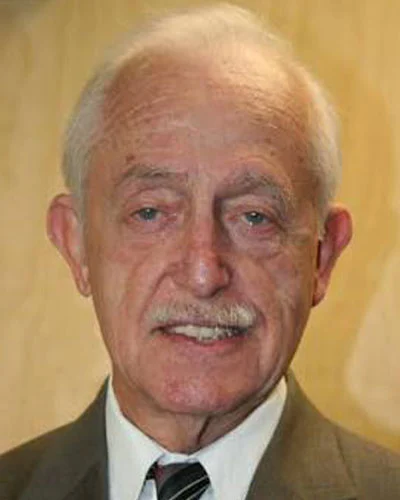
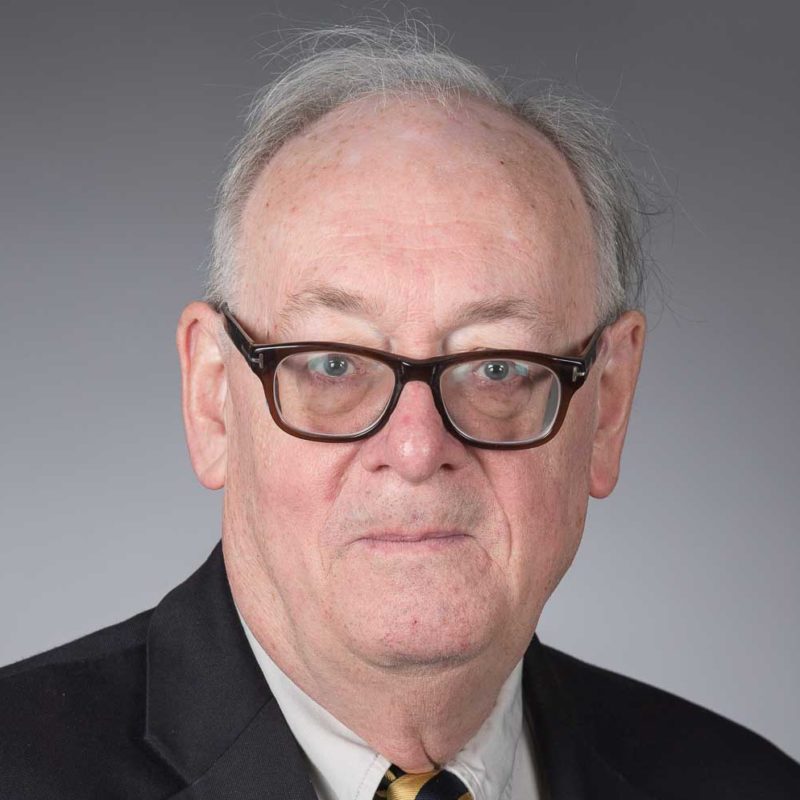
The inaugural award went to George Cotter, and with his permission, it now bears his name: The George Cotter Award for Vision and Leadership in the Field of Data Analytics — the best way we could think of to honor George’s lasting impact on this community. George passed away in April 2025 at the age of 97. Remarkably, he was still writing papers and advocating for greater attention to threats against the nation’s electrical grid up to the very end.
George spent his career at the intersection of national security and high-performance computing, from his early days as a Navy analyst through three decades in NSA’s cryptologic field, rising to Chief Scientist and CIO before retiring as a Senior NSA Technology Executive in 2009. He was elected to the National Academy of Engineering in 2007 and received the National Intelligence Distinguished Service Medal in 2010.
Throughout, George championed research investments and system acquisitions that shaped the HPC industry and enabled breakthroughs in signals intelligence and analysis, including much of which has since trickled down into today’s commodity processors and telecom systems. He was an early advocate for supercomputers with large memory addressing to support graph analytics, a vision reflected in the NSCI Executive Order’s push to unify modeling/simulation and data analytic computing. That same vision was the reason that CLASSIC was founded, and why we’re honored to carry his name forward.

George Cotter has been a long-time supporter of high performance computing and associated research in materials, semiconductors ,and telecommunications. This included research investments and system acquisitions that had a material effect on the HPC industry and computing and communications technology. Without this level of support, the industry and the technology would not have achieved some very significant breakthroughs in support of National Security initiatives in signals intelligence and signals analysis.
Much of this technology has trickled down to today’s commodity microprocessors and telecommunications systems. George has been an advocate of supercomputers with large memory addressing capability that support all kinds of graph analytics. His vision lives on today; last year’s NSCI Executive Order includes an objective to increase the coherence between the technology base used for modeling and simulation and that used for data analytic computing. This was the rationale for founding CLASSIC five years ago, and is why we are pleased that George has consented to allow us to name this annual award in his honor.
Bruce Hendrickson is Associate Director for Computation at Lawrence Livermore National Laboratory. He has long demonstrated a passion for large-scale analytics, evolving from work in graph algorithms and discrete mathematics at Sandia National Laboratories. Bruce exemplified intellectual honesty in his scientific inquiry into the subject, and has been willing to move past long established models of computation to which he himself contributed in the area of traditional HPC. Bruce has done so while mentoring others at all levels of the field and encouraging the growth we see today.
Burton Smith was a visionary architect of parallel computing, from his early work on the HEP processor to co-founding Tera Computer, which became Cray Inc. He never lost sight of the throughput problem: how to keep massively parallel machines fed with useful work, a challenge at the heart of today’s large-scale analytics. His passing in 2022 is a profound loss to a community he helped build from its foundations.
Bill Carlson has spent his career translating the government’s hardest data problems into technology the community could actually build. He led the design of UPC and championed Partitioned Global Address Space languages more broadly, always with an eye toward what scalable data analysis would actually require. Just as important as his technical contributions was his gift for finding common ground and keeping people focused on shared goals.
Thomas Sterling is the father of the Beowulf cluster, which proved that real HPC could be done via commodity computing and helped drive the scale-out revolution behind cloud computing today. He helped chart the course from petascale to exascale, and saw early that the field’s future problems would be dynamic, graph-based, and demanding of new architectures. Thomas’ willingness to move past paradigms he himself helped establish marks him as a rare kind of leader in this field.
Mike Merrill spent 34 years as a Computer Scientist for the Department of Defense, where his innovative thinking and leadership on high-performance computing projects earned him a Distinguished Civilian Service Medal in 2022. Mike had a profound impact on the analytics community, including in the founding of this conference. Just as much as for his technical achievements, he was known for mentoring the many colleagues he called his kids, his minions, and always his friends. It was a great loss when Mike passed away in 2022.
Peter Kogge has spent decades pushing computer architecture toward the irregular, graph-heavy problems that define modern data analytics. From his early multithreaded designs at IBM to co-founding EMU Technology to accelerate graph workloads, his work has consistently anticipated where the field needed to go. Peter brought that same forward-looking instinct to rebuilding how computer science and engineering are taught.
Candy Culhane spent her career quietly setting HPC’s direction years ahead of the field, from shaping the DARPA HPCS program to pushing memory hierarchies and multi-threaded architectures for graph and data-intensive workloads long before they became mainstream. She’s since become a driving force in quantum computing, building LANL’s quantum strategy and co-founding IEEE Quantum Week. As George put it, the community has its “quiet people” and its “loud people,” and Candy is a rare bridge between the two: someone who turns technical vision into programmatic reality, while enabling generations of researchers, including past Cotter Award winners.
Tamara G. Kolda is an independent mathematical consultant and founder of MathSci.ai, following more than two decades as a Member of the Technical Staff at Sandia National Laboratories. Her work spans mathematical data science, tensor methods, optimization, and high-performance scientific computing, and she is a member of the National Academy of Engineering as well as a Fellow of SIAM and ACM. Tamara is currently interested in the intersection of AI, applied mathematics, and large-scale computation, with an emphasis on rigorous evaluation and real-world scientific impact.