
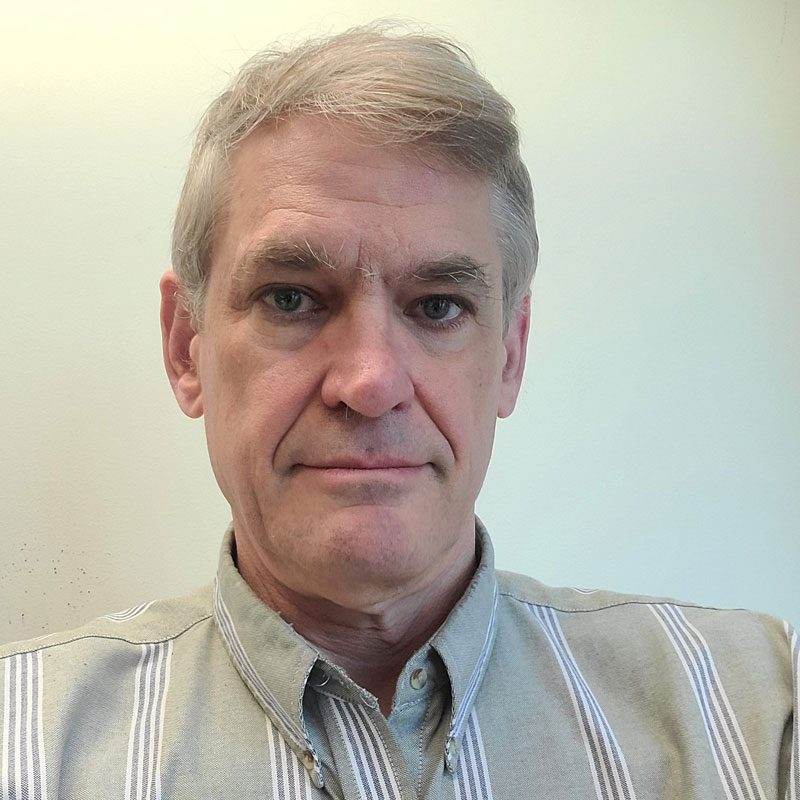
Dr. Eric Altman is a Research Scientist at the IBM T.J. Watson Research Center in New York. His research has spanned compilers, computer architecture, software and system performance, and more recently data and AI. Over his career, Eric has been involved in a variety of activities, including the design of image recognition software and hardware; hardware and software to decoy missiles; realtime automotive software; and design of advanced IBM processor chips including servers, the Cell processor made famous in the Sony Playstation 3 game console, and DAISY — a dynamic compilation system enabling a VLIW processor design fully compatible with the IBM Power architecture. In recent years, he has led the development of IBM Synthetic Data Sets – with realistic data for a broad set of financial tasks. Dr. Altman has also served as editor-in-chief of IEEE Micro. He has been the Chair of the Association for Computing Machinery (ACM)’s Special Interest Group (SIG) on Microarchitecture and the Chair of ACM’s SIG Governing Board, which comprises major disciplines across computing. He has also been the Secretary-Treasurer of ACM, and currently serves on the ACM Investment Committee overseeing more than $200 million in assets.

Jonathan Berry is a Distinguished Member of the Technical Staff at Sandia National Laboratories. He holds a Ph.D. in computer science from Rensselaer Polytechnic Institute and spent almost a decade in liberal arts academia before joining Sandia in 2004. Jonathan has led a variety of graph-related projects at Sandia and has served on technical program committees of international conferences/workshops more than ten times, including Supercomputing, ACM/SPAA, IEEE/IPDPS, IEEE/HPEC, ESA-B, SIAM Data Mining and SIAM ACDA. Among his roughly 50 refereed publications are several distinguished papers, including the Best Paper in the Algorithms track of IPDPS 2015. Jonathan’s software and benchmarking interests include the MultiThreaded Graph Library (MTGL), the Mantevo/miniTri mini-app, and variations on the Firehose benchmark, and his current research includes both static and streaming algorithms for the computational kernels underlying graph algorithms and machine learning.
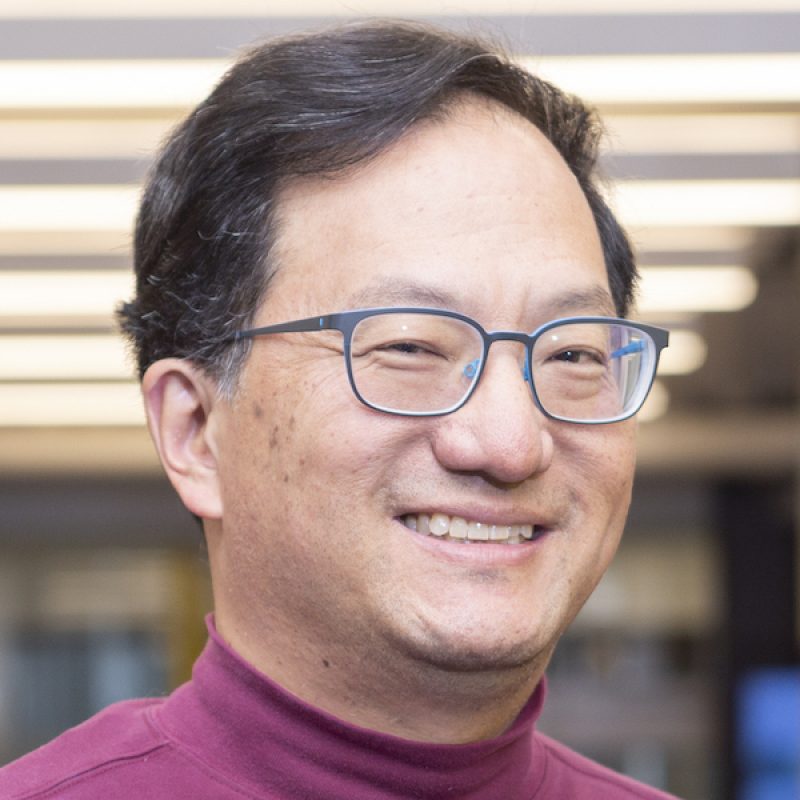
Dr. Andrew A. Chien is President of Chicago UpDown Computing, Inc. He is well known for research on cloud resource management and software, large-scale system architecture, and graph computing architecture. Andrew led the IARPA-funded UpDown System Project, designing breakthrough scalable graph analytics systems. Since 2015, he has been the leader of the Zero-carbon Cloud project, exploring datacenters as flexible loads for the power grid. Andrew has received numerous recognitions for research and has served on the NSF CISE Advisory Committee, DARPA ISAT, and Computing Research Association Board. He is a Fellow of the ACM, IEEE, and AAAS and has served as EiC of Communications of the ACM, 2017-2022, Vice President of Research at Intel Corporation from 2005-2010, and as chair Professor at University of Chicago and University of California, San Diego (1998-2005). Andrew began his research career as Professor at the University of Illinois (1990-98) and received his BS, MS, and Ph.D. degrees from the Massachusetts Institute of Technology.
Giri Chukkapalli is a renowned computer scientist and engineer with over 30 years of experience in high performance computing, parallel algorithms, and supercomputer architecture. His PhD research introduced novel methods for solving shallow water equations using spherical spiral-based finite element meshes. Giri has contributed to major platforms like BlueGene/L and TACC Ranger, and held key roles at San Diego Supercomputer Center (SDSC), Sun Microsystems, Oracle, Cray, Broadcom, and NVIDIA. His expertise spans performance analysis, system architecture, and energy-efficient ARM64-based SoC designs for pre-exascale systems. At NVIDIA, he leads innovation in the CTO office, advancing the Grace chip architecture.

Greg Compton has an extensive background in HPC design and optimization, focusing on signal detection and processing in areas such as genome alignment, simulation, and telecommunications. Throughout his distinguished career, he has taken on both operational and design roles at well-known companies such as Tiscali, Capita, and BSkyB (Fox TV UK), and has collaborated on projects with the DoD/DARPA. Greg’s expertise played a pivotal role in shaping the data architecture for numerous major broadband service providers, and based on his experience in telecom, he formed a company to address some of the hardest problems in engineering and computer science. His newest company, AbraWorks, is emerging from stealth with a suite of new products designed to address the major challenges in defense. Greg is avid racing enthusiast, be it watching F1, driving his heavily modified VX, or designing novel technologies for F1 to ban at the concept stage.

Candace is a Project/Program Director for Los Alamos National Laboratory, where she is currently part of the LANL team working on the DARPA Quantum Benchmarking Initiative. Prior to joining the QBI team, Candace served as the lab’s founding Quantum Science Coordinator, working to strengthen and grow the LANL workforce in quantum information sciences through education and training and the enhancement of inter-laboratory, industrial, and academic partnerships. Prior to joining LANL, Candace was with the Department of Defense, where she was a program manager on multiple projects to stimulate the creation of commercial supercomputers. She was elevated to the Defense Intelligence Senior Executive Service in 2008 and her last position before retirement from the USG was Deputy for Future Computing at the Laboratory for Physical Sciences. Candace holds a BS and MS in Computer Science and an MS in Data Analysis. She has served as a Senior Advisor to the Council on Competitiveness, is a co-founder of the IEEE Conference on Quantum Computing and Engineering, and previously served as the General Chair for the 2022 International Conference for High Performance Computing, Networking, Storage, and Analysis.

Earl Joseph, Chief Executive Officer of Hyperion Research, drives research and consulting efforts associated with the United States, Europe, and Asia-Pacific markets for technical computing. He advises Hyperion Research clients on the competitive, managerial, technological, integration, and implementation issues for HPC and AI, and heads up Hyperion Research’s high-end HPC user forum activities. Earl’s areas of expertise include technical computers (from entry-level servers to high-end capability supercomputers), software, AI technologies, storage, and networking solutions. He has worked for four technical computing companies in multiple marketing and R&D roles. Earl holds a Ph.D. from the University of Minnesota, where his research focus was the strategic management of high technology firms, and an undergraduate degree in business and technology from the University of Minnesota.

Tamara G. Kolda is an independent mathematical consultant and founder of MathSci.ai, following more than two decades as a Member of the Technical Staff at Sandia National Laboratories. Her work spans mathematical data science, tensor methods, optimization, and high-performance scientific computing, and she is a member of the National Academy of Engineering as well as a Fellow of SIAM and ACM. Tamara is currently interested in the intersection of AI, applied mathematics, and large-scale computation, with an emphasis on rigorous evaluation and real-world scientific impact.
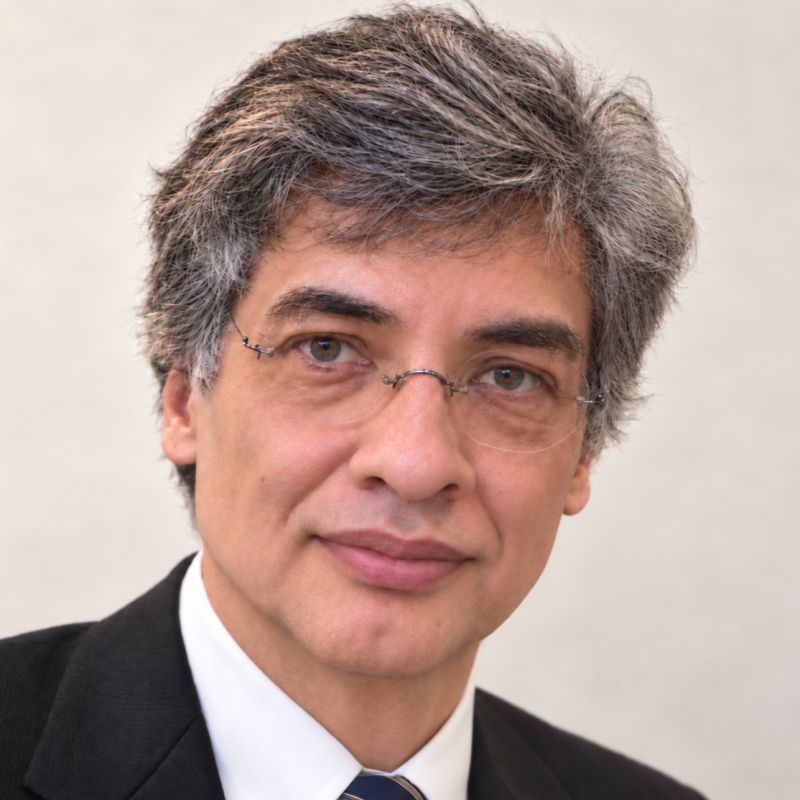
Andrew Lumsdaine is a Laboratory Fellow in the Applied and Computational Mathematics and Data Division at Pacific Northwest National Laboratory and an Affiliate Professor in the Paul G. Allen School of Computer Science and Engineering at the University of Washington. His research focuses on high-performance computing, graph algorithms, and generic programming in C++. Andrew has contributed to open-source projects including the Boost Graph Library and Open MPI, and has participated in MPI and C++ standardization. His current work focuses on the co-design of algorithms, software, hardware, and runtime systems for scalable graph queries, as well as the verification and validation of code translated or generated by AI.
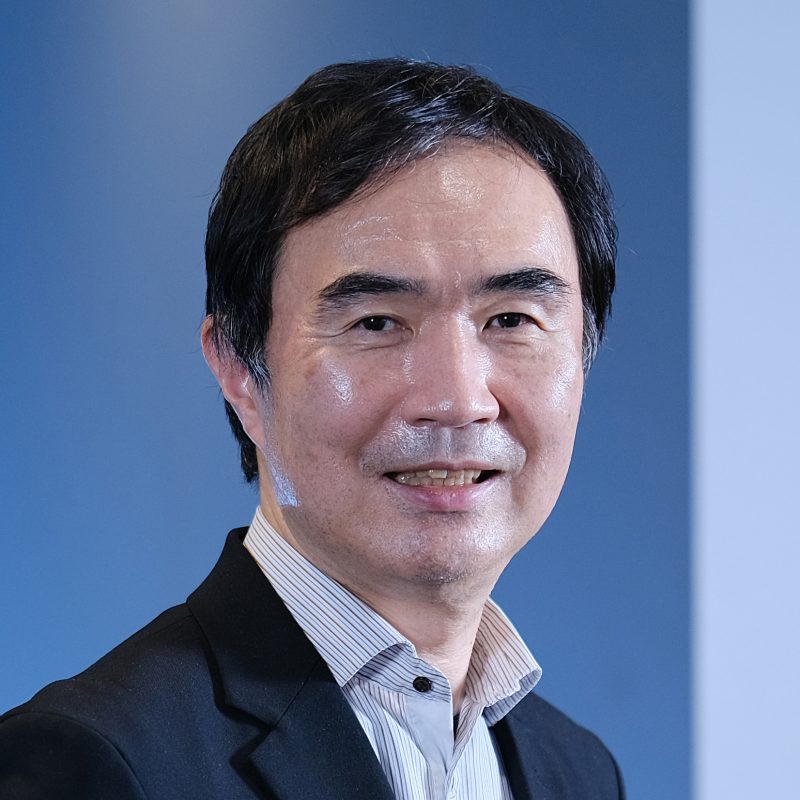
Satoshi Matsuoka has been Director of the RIKEN Center for Computational Science (R-CCS) since 2018 and is a leading figure in high-performance computing. He led development of the Fugaku supercomputer, which topped all major global rankings in 2020–2021. His research advances next-generation, post-Moore computing, including the future FugakuNEXT system. A recipient of the ACM Gordon Bell Prize and major IEEE honors, Satoshi has published over 500 papers and received Japan’s Medal of Honor (Purple Ribbon), one of the country’s highest honors for academic achievement, in 2022.

Michael Morrison is the Financial Intelligence Lead at Booz Allen Hamilton, where he works in the National Security Sector and Economic Stability accounts to deliver capabilities that support government missions within the financial or economic elements of national security. Michael develops solutions and implements teams that apply data science and analytics, financial intelligence analysis, investigation support, economic analysis, cryptocurrency expertise, and other relevant solutions to financial transaction and business records datasets. His background is in intelligence analysis and military operations, has supported global anti-money laundering investigations for the Department of The Treasury since 2017.

Devan Patel is a constitutional lawyer and AI policy strategist working where technology, law, and national security meet. He is Founder and President of Crux Advisory Group, advising organizations and policymakers on AI governance, ethics, and legislative strategy, and a Visiting Fellow for Tech Ethics & Democracy at the Joseph Rainey Center for Public Policy. He is an Adjunct Professor of Law at Notre Dame Law School and a founding member of the Federalist Society’s AI and Law Working Group. Devan was one of only ten Americans invited to the Vatican for the presentation of Pope Leo XIV’s encyclical on AI, Magnifica Humanitas. He writes on AI, faith, and U.S.–China strategy, including RealClearPolitics op-eds on the encyclical and a recent piece co-authored with the founding director of the Pentagon’s Joint AI Center and NATO’s former head of nuclear policy. Devan is a regular commentator on EWTN News Nightly. A San Francisco native and the first in his family to attend college, he holds a B.A. from The George Washington University and a J.D. from Notre Dame Law School. More at devanpatel.com.
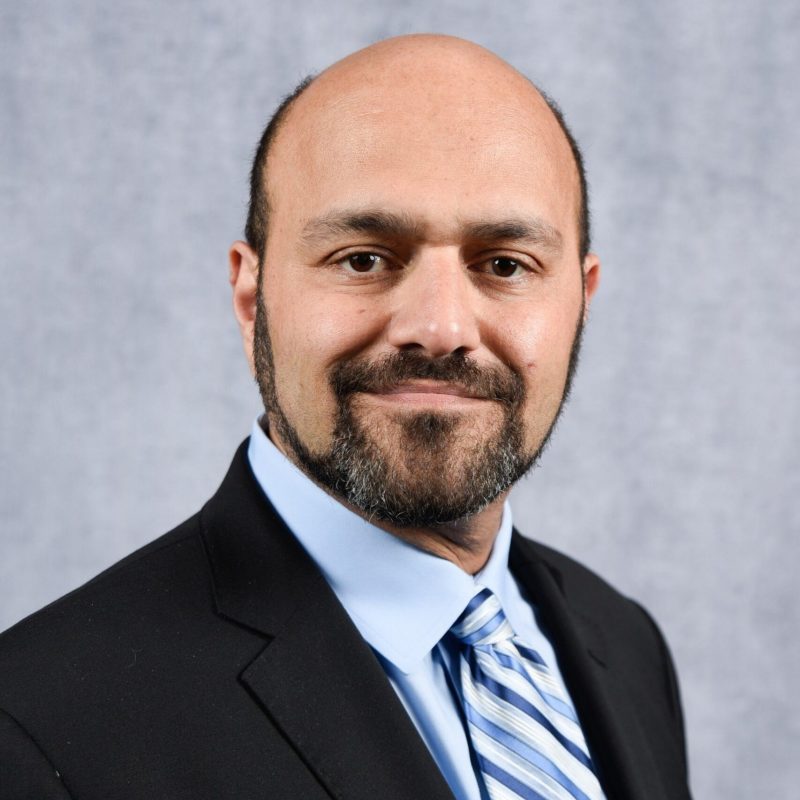
Nick Rahaghi, M.D., Ph.D. is Associate Professor of Medicine in the Division of Pulmonary and Critical Care Medicine at the David Geffen School of Medicine at UCLA. He received his B.S., in physics, Ph.D. In Bioengineering, and M.D. from the University of California, San Diego. Nick builds analytic pipelines that turn routine clinical data into quantitative measures of disease. His group extracts detailed vascular structure from chest CT scans at scale and develops natural language processing and large language model methods to pull structured information from millions of unstructured medical records. That work links imaging, clinical notes, and invasive measurements across UCLA, Brigham and Women’s Hospital, Massachusetts General Hospital, Northwestern University, and national research cohorts. Nick leads two NIH-funded studies built on this approach, co-leads the Artificial Intelligence Working Group of the Pulmonary Vascular Research Institute, and cares for patients with pulmonary hypertension and critical illness at UCLA.
Siva Rajamanickam is a Distinguished Member of Technical Staff at Sandia National Laboratories and AI Chief Scientist for Sandia’s NNSA Advanced Simulation and Computing (ASC) program. He is National Co-lead for the Infrastructure pillar of the Genesis Mission’s Science and Security Platform, a federated AI infrastructure spanning all DOE national laboratories, plants, and sites. Siva leads the BANYAN Generative AI Institute and the CHANDLER federated foundation model effort across the NNSA Tri-Labs. His work spans AI models, systems, and platforms; federated multi-cloud infrastructure; hardware–software co-design; and HPC software. He has long-standing contributions to the Kokkos ecosystem and the Trilinos framework, and to U.S. exascale computing efforts. Siva’s work has received several awards, including the Secretary of Energy’s Honor Award and multiple R&D 100 Awards, and his team was a Gordon Bell Prize finalist.

Alon Rashelbach is Co-Founder and CTO of NOL8, where he leads the development of hardware-accelerated infrastructure for real-time AI data processing. Alon holds a Ph.D. in Electrical and Computer Engineering from the Technion, where his research focused on high-performance systems, learned indexes, packet classification, and FPGA acceleration. His work has been published at ACM SIGCOMM, USENIX NSDI, and IEEE/ACM MICRO. Prior to NOL8, Alon held technical roles at Tabnine and Mellanox Technologies, now NVIDIA.

Karu Sankaralingam is a Research Director at NVIDIA Research and Professor at UW-Madison. His work has been featured in industry forums of Mentor and Synopsys, and has been covered by the New York Times, Wired, and IEEE Spectrum. Karu has published more than 100 research papers, has graduated 11 Ph.D. students, is an inventor on 21 patents, and authored nine award-winning papers. He is a Fellow of IEEE and a recipient of the Vilas Faculty Early Career Investigator Award in 2018, Wisconsin Innovation Award in 2016, IEEE TCCA Young Computer Architecture Award in 2012, the Emil H Steiger Distinguished Teaching award in 2014, the Letters and Science Philip R. Certain – Gary Sandefur Distinguished Faculty Award in 2013, and the NSF CAREER award in 2009. Karu founded SimpleMachines in 2017, which developed chip designs applying dataflow computing to push the limits of AI generality in hardware. His research breakthroughs include constraint-theory based compilation for spatial architectures, specialized datapaths that can be dynamically configured, and sampling theory applied to reliable computing.
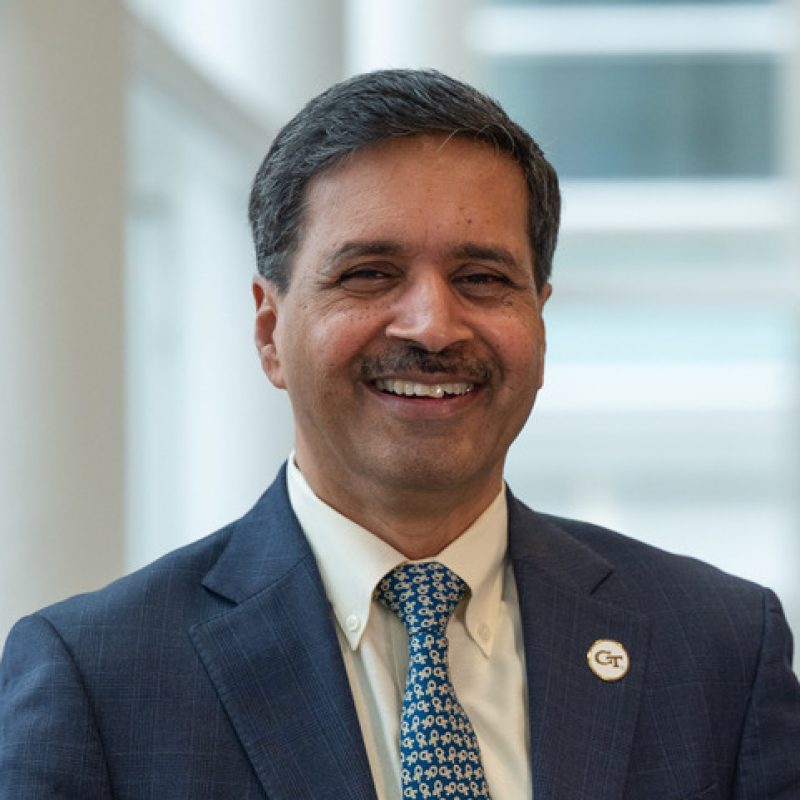
Vivek Sarkar is the John P. Imlay, Jr. Dean of the College of Computing at Georgia Institute of Technology and a professor in the School of Computer Science. His research spans programming languages, compilers, runtime systems, and other software technologies for parallel and high-performance computing. Previously, he was the E.D. Butcher Chair in Engineering and Chair of Computer Science at Rice University. Vivek began his career at IBM Research after receiving his Ph.D. from Stanford University, where he was advised by John Hennessy. His work at IBM included the PTRAN parallelization system, IBM XL compilers, the Jikes Research Virtual Machine, and the X10 programming language. Vivek is an ACM Fellow, IEEE Fellow, former member of the IBM Academy of Technology, and recipient of the ACM-IEEE CS Ken Kennedy Award. His professional service includes the CRA Board of Directors, the U.S. Department of Energy’s ASCAC, and the ACM Council.
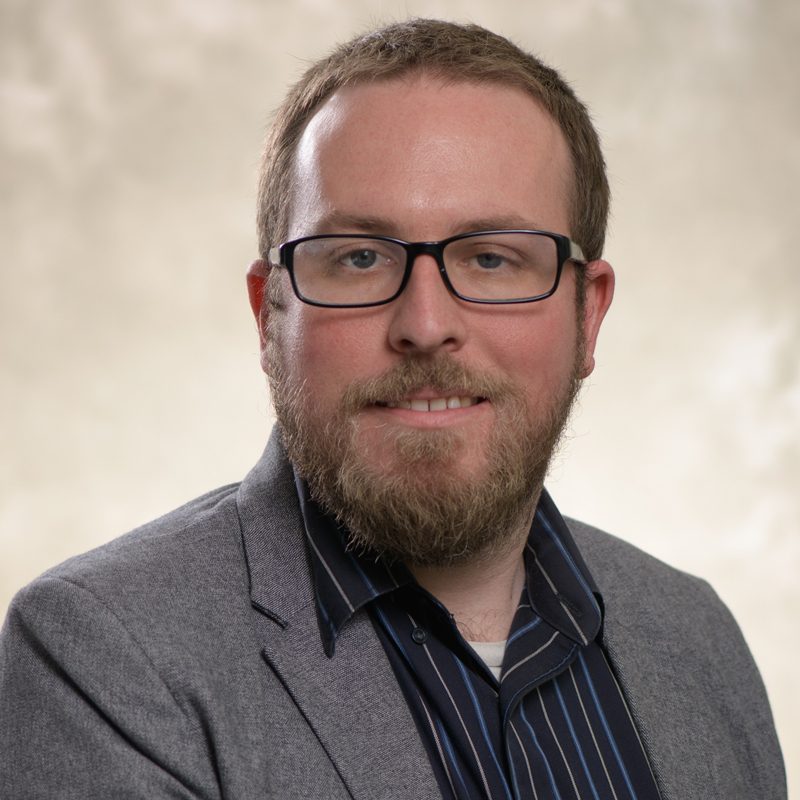
Matt Sinclair is a computational scientist at Argonne National Laboratory, where he works at the intersection of agentic AI, high-performance computing, and computational structural biology. Matt’s work focuses on building production-grade agentic systems that operate on leadership-class supercomputers. That includes long-lived agent services that connect AI agents to HPC resources and multi-agent frameworks for therapeutic design deployed on the Aurora exascale system. He also develops open-source tools for high-throughput molecular simulation and analysis. Matt’s research draws on a background in molecular dynamics, protein language models, and quantum chemistry to ask how autonomous AI systems can accelerate scientific discovery while staying reliable, auditable, and practical to operate on shared infrastructure.

Dr. Jennifer Sleeman is a Senior AI Research Scientist at the Johns Hopkins University Applied Physics Laboratory (APL). She has over 18 years of experience in artificial intelligence research and earned her Ph.D. in Computer Science from UMBC. Since 2018, Jennifer’s work has focused on applying AI to complex Earth system challenges, including atmospheric composition, air quality forecasting, wildfire emissions, and extreme events. More recently, she has investigated how deep learning can help identify potential climate tipping points and support early warning through AI-enabled Earth system digital twins. Jennifer’s research aims to bridge advanced machine learning with physically grounded Earth system science to better understand and anticipate high impact Earth system changes.

Thomas Sterling is a Senior Research Scientist and Director of Advanced Future Architecture at the Texas Advanced Computing Center with the University of Texas, Austin. For the previous 13 years he was a Full Professor at Indiana University, Bloomington in the School of Informatics, Computing, and Engineering. Since receiving his Ph.D. from MIT as a Hertz Fellow in 1984, Thomas has engaged in applied research in parallel computing system structures, semantics, and operation in industry, government labs, and academia. Professional affiliations have included Harris Corp., IDA Supercomputing Research Center, NASA (GSFC, JPL), University of Maryland, Caltech, and Louisiana State University. Thomas is best known as the “father of Beowulf” for his pioneering research in commodity/Linux cluster computing, for which he shared the Gordon Bell Prize in1997. His current research is associated with extreme scale computing through memory-centric non-von Neumann architecture concepts to accelerate dynamic graph processing for AI. This work is currently in the advanced design phase to extend computing performance beyond Moore’s Law and nanoscale towards the realm of Zettaflops operation. Thomas was the recipient of the 2013 Vanguard Award and the ICPP Test-of-Time Award, inducted in the Space Technologies Hall of Fame, selected as a member of the “HPCwire 35 Legends”, and is a Senior Member of the IEEE and a Fellow of the AAAS. He is noted for his hundreds of invited presentations. Thomas is the co-author of seven books, including Enabling Technologies for Petaflops Computing and How to Build a Beowulf, and holds seven patents. Most recently, he co-authored the second edition of the introductory textbook, High Performance Computing Modern Systems and Practices, published by Morgan-Kaufmann, 2025. He is the holder of the prestigious 2026 IEEE Seymour Cray Award.

Dr. Thomas Wagner is the Associate Director for Earth Action at NASA Headquarters, where he oversees programs that apply satellite observations to real-world challenges, such as disasters, wildfire, water, and agriculture. Since joining NASA, Tom has worked in research and spaceflight missions in both Earth and planetary sciences, covering climate change, polar science, and sea level rise, as well studies of planets and asteroids throughout our solar system. Tom previously ran various Earth science programs at the National Science foundation and has visited the South Pole six times. After his Ph.D. research at MIT, he taught at the University of Papua New Guinea while working on international development projects. In his spare time, Tom enjoys working with writers and artists on fiction and non-fiction projects, including the Blade Runner 2049 movie and the Magic School Bus series.